
 Add to Chrome
Ecommerce customer support response time: why speed drives trust and growth
Why fast customer support matters in ecommerce: response time shapes trust, CSAT, repeat purchases, and how much work lands in your queue tomorrow.

Ecommerce customer support response time is not just an operations metric. It changes how customers feel about your brand when something goes wrong or when they need reassurance before buying.
If a customer has to wait too long for a simple answer about shipping, returns, or order edits, the delay creates friction. That friction turns into follow-up messages, refund anxiety, and lost trust.
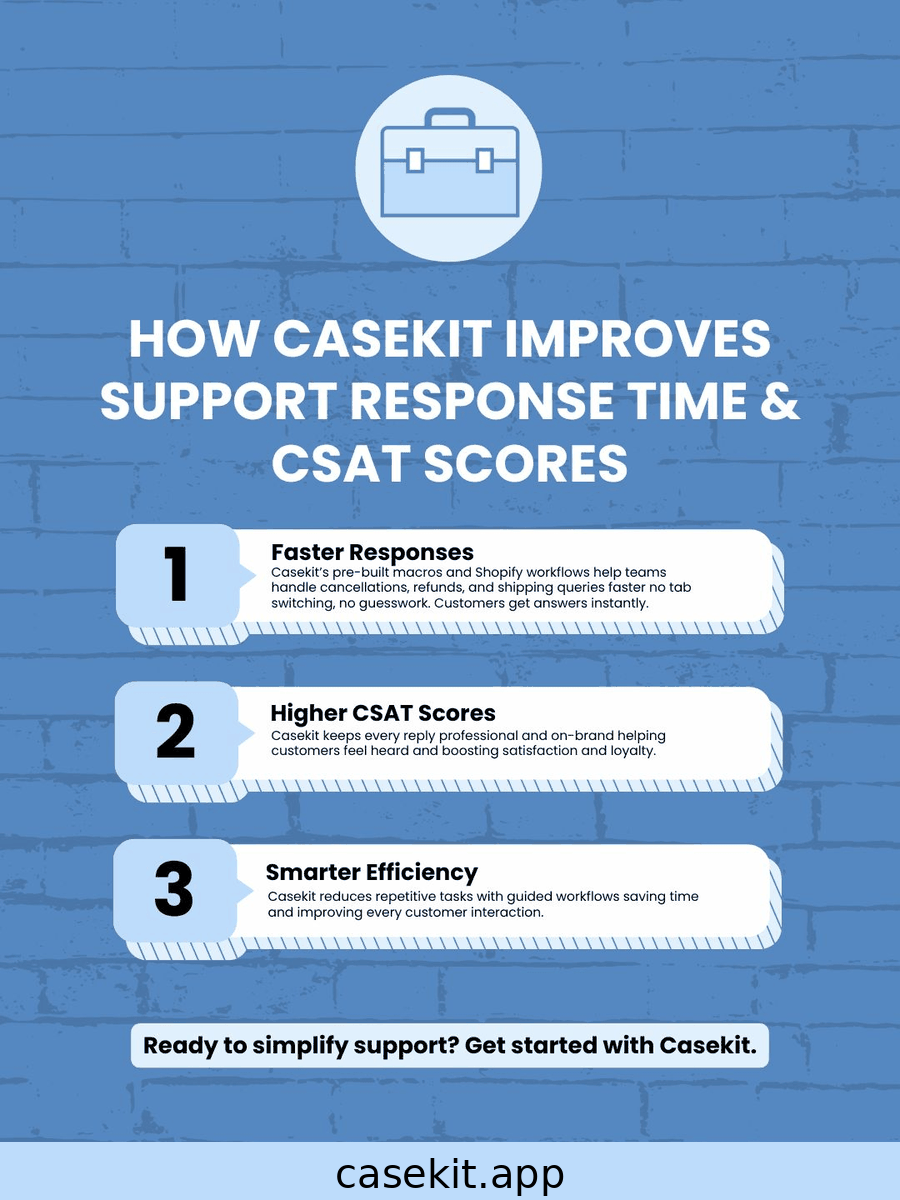
Why response time matters so much in ecommerce
- Orders create anxiety. Customers want confirmation, tracking clarity, and timelines.
- Pre-purchase questions affect conversion. Slow answers can cost the sale before the order ever happens.
- Delayed replies create more tickets. Customers send “just following up” messages that increase backlog.
- Speed signals reliability. A fast, clear reply tells the customer the business is organized and trustworthy.
That is why support speed affects more than CSAT. It can influence refunds, loyalty, repeat purchases, and how often customers recommend the brand.
The support metrics worth watching
If you want to improve response time without overcomplicating reporting, focus on these metrics first:
- First response time — how quickly customers hear back.
- Resolution time — how long it takes to fully close the issue.
- Repeat contact rate — how often customers ask again because the first answer was incomplete.
- Backlog — how many tickets are waiting right now.
- CSAT — whether the experience felt helpful from the customer’s perspective.
How to improve ecommerce customer support response time
1) Send proactive updates where possible
Shipping delays, preorders, and refund timelines create avoidable tickets. A proactive message often prevents the ticket from being created in the first place.
2) Use ready-made replies for repeat scenarios
The fastest support teams do not write from zero every time. They use well-written macros and adapt them quickly to the order context.
3) Put order context next to the reply box
If agents need extra clicks just to confirm the order number, tracking link, or fulfillment status, first response time will always suffer.
4) Route urgent tickets differently
Address changes before shipment, fraud verification, and cancellation requests before fulfillment should jump ahead of lower-risk tickets.
5) Create playbooks for common exceptions
Teams move faster when a delivered-but-not-received issue or damaged package already has a clear checklist and approved wording.
A simple response-time playbook for Shopify and WooCommerce teams
- Tag the top ticket categories you handle every week.
- Create one approved reply for each high-volume category.
- Keep order, shipping, and policy context accessible while replying.
- Review the tickets with the longest first reply every Friday.
- Turn repeated delays into proactive customer updates or macros.
That is usually enough to create noticeable gains without adding more software than the team needs.
Related reads
- Ecommerce support KPIs
- Ecommerce support checklist
- Shopify customer support tips
- Ecommerce support automation
FAQ
What is customer support response time in ecommerce?
It is the time between a customer sending a message and receiving the first reply from your team. For ecommerce brands, that first reply heavily shapes trust.
How do you improve response time without hiring more agents?
Reduce repetitive work first: use templates, keep order context visible, triage urgent tickets correctly, and proactively answer common questions before customers ask.
Does faster customer support increase repeat purchases?
It often does, because faster replies reduce uncertainty, improve the customer experience, and make buyers more willing to trust the brand again.